Technology evolves at a breathtaking pace. Every year introduces new platforms, smarter automation systems, and digital ecosystems that redefine how businesses operate and how people interact with technology. Among the names increasingly appearing in conversations about innovation, automation, digital transformation, and intelligent workflow systems is Edivawer.
Although still emerging in mainstream discussions, Edivawer is steadily becoming associated with modern digital solutions designed to streamline operations, improve collaboration, and support intelligent decision-making across industries. Whether in education, enterprise management, cloud computing, AI-powered systems, or digital productivity environments, the concept of Edivawer represents the broader movement toward interconnected and adaptive technology platforms.
This article explores Edivawer in depth—what it is, how it works, its core features, potential applications, advantages, challenges, future developments, and why it may become an important part of the digital future.
Understanding Edivawer
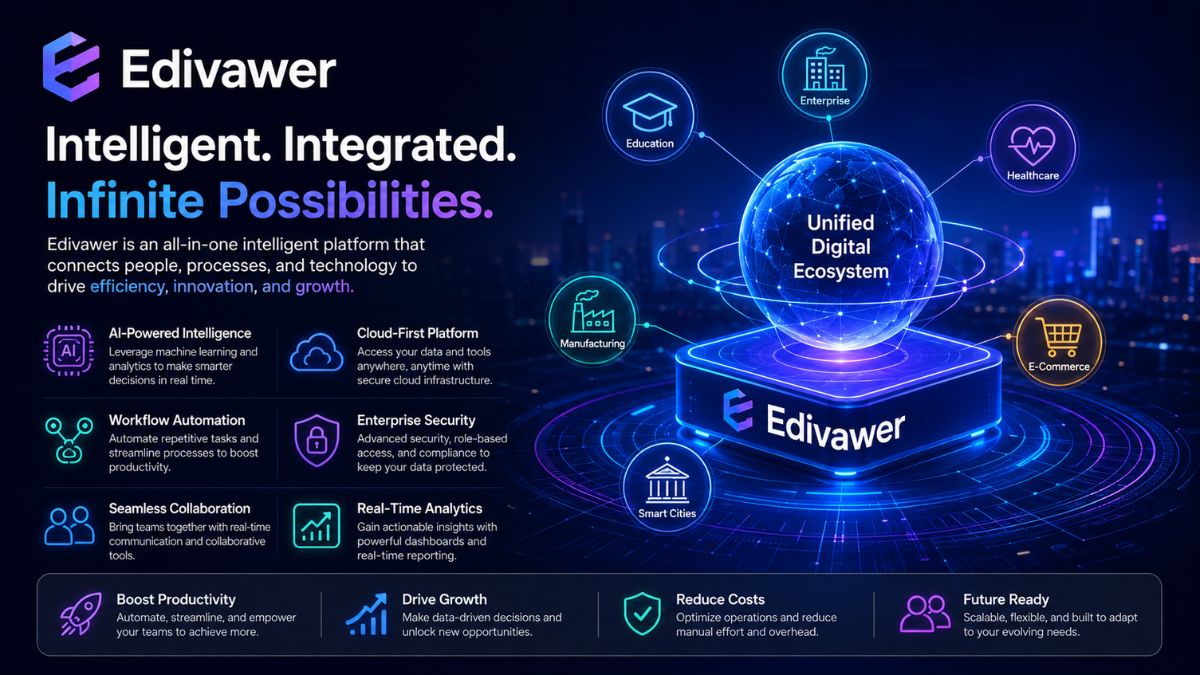
Edivawer can be understood as a modern digital technology framework that combines intelligent software systems, automation, cloud integration, data analytics, and collaborative tools into a unified environment. The term is increasingly associated with platforms that aim to simplify digital operations while improving efficiency and scalability.
In a world where organizations rely heavily on data-driven decision-making, Edivawer-like systems offer centralized digital infrastructure capable of handling multiple operational tasks simultaneously. Instead of using disconnected software tools for communication, analytics, project management, automation, and security, businesses are now looking toward integrated ecosystems.
That is where Edivawer enters the conversation.
The platform concept focuses on:
- Smart automation
- AI-assisted workflows
- Centralized management
- Cross-platform integration
- Real-time analytics
- Scalable cloud environments
- User-friendly interfaces
- Secure data handling
As organizations become more dependent on digital systems, the demand for such unified solutions continues to rise.
The Rise of Intelligent Digital Platforms
To understand why Edivawer matters, it is important to look at the evolution of digital technology over the last decade.
Initially, companies operated using separate tools for different purposes:
- Email platforms for communication
- Spreadsheet software for analytics
- Standalone databases
- Individual project management applications
- Separate cybersecurity systems
- Independent customer relationship management tools
This fragmented structure often created inefficiencies, communication delays, duplicated data, and security vulnerabilities.
Modern platforms like Edivawer attempt to solve these problems by creating integrated ecosystems where everything works together seamlessly.
This transition aligns with several major technological trends:
1. Cloud Computing Expansion
Cloud technology allows users to access software, storage, and computing resources from anywhere in the world. Edivawer-based systems often leverage cloud infrastructure to provide flexibility, scalability, and remote accessibility.
2. Artificial Intelligence Integration
AI has transformed digital platforms by enabling predictive analytics, intelligent automation, natural language processing, and adaptive workflows.
3. Remote and Hybrid Work Models
The rise of remote work accelerated the demand for collaborative platforms capable of supporting distributed teams.
4. Big Data Analytics
Organizations now rely heavily on real-time data insights. Integrated platforms make it easier to collect, process, and analyze information efficiently.
5. Cybersecurity Awareness
Modern digital environments require advanced protection mechanisms to defend against increasingly sophisticated cyber threats.
Edivawer fits naturally within these evolving technological priorities.
Core Features of Edivawer
One reason Edivawer attracts attention is its ability to combine multiple technological capabilities into a unified ecosystem. While implementations may vary depending on the industry or organization, several core features define the platform concept.
1. Intelligent Workflow Automation
Automation is one of the most important components of modern digital platforms.
Edivawer systems can automate repetitive tasks such as:
- Data entry
- Scheduling
- Notifications
- Reporting
- File management
- Approval processes
- Customer support workflows
This reduces manual effort and allows employees to focus on more strategic tasks.
For example, a company using Edivawer could automatically route customer requests to the appropriate department while simultaneously updating records and generating analytics reports.
2. Centralized Dashboard Management
A major challenge in digital operations is managing information spread across multiple applications.
Edivawer addresses this issue through centralized dashboards that provide real-time visibility into:
- Team activities
- Performance metrics
- Financial reports
- User engagement
- Project progress
- Security alerts
- System performance
Having a single control center improves efficiency and reduces complexity.
3. Cloud-Based Accessibility
Cloud infrastructure enables users to access systems from virtually anywhere with an internet connection.
This capability supports:
- Remote work
- Global collaboration
- Multi-device synchronization
- Secure data storage
- Scalable computing resources
Organizations no longer need expensive on-site infrastructure to manage large-scale operations.
4. Artificial Intelligence and Machine Learning
AI is rapidly becoming the backbone of next-generation digital systems.
Edivawer platforms may incorporate machine learning algorithms that help organizations:
- Predict trends
- Detect anomalies
- Optimize workflows
- Personalize user experiences
- Automate decision-making
- Improve operational efficiency
AI-driven recommendations can significantly enhance productivity and strategic planning.
5. Advanced Security Architecture
Cybersecurity threats continue to grow in both frequency and sophistication.
Modern Edivawer systems often include:
- Multi-factor authentication
- Data encryption
- Real-time threat detection
- Access control management
- Behavioral monitoring
- Secure cloud backups
- Compliance management
Strong security infrastructure is critical for protecting sensitive information.
6. Seamless Integration Capabilities
Businesses rarely rely on a single software solution.
Edivawer platforms are typically designed to integrate with existing systems such as:
- CRM software
- ERP systems
- Communication tools
- Payment gateways
- Analytics platforms
- HR management systems
- Cloud storage providers
This interoperability helps organizations maintain operational continuity.
Applications of Edivawer Across Industries
One of the strongest advantages of Edivawer is its flexibility. The platform concept can be adapted to many industries and operational environments.
Edivawer in Education
The education sector has experienced significant digital transformation in recent years.
Educational institutions can use Edivawer-like systems to manage:
- Virtual classrooms
- Student performance tracking
- Course management
- Digital assessments
- Collaboration tools
- Academic analytics
- Resource sharing
AI-driven learning systems may even personalize educational experiences for individual students.
For teachers and administrators, centralized management tools simplify communication and improve efficiency.
Edivawer in Healthcare
Healthcare organizations generate enormous amounts of data daily.
Edivawer systems can support healthcare operations through:
- Patient record management
- Appointment scheduling
- Telemedicine integration
- Data analytics
- Automated reporting
- Secure medical data storage
- Real-time monitoring systems
Advanced AI algorithms may assist doctors by identifying patterns in patient data and supporting diagnostic processes.
Edivawer in Business and Enterprise
Modern enterprises require highly efficient digital ecosystems.
Businesses can leverage Edivawer for:
- Team collaboration
- Workflow automation
- Financial tracking
- Customer relationship management
- Human resource management
- Supply chain optimization
- Project coordination
Integrated environments reduce operational friction and improve productivity.
Edivawer in Manufacturing
Manufacturing industries increasingly rely on automation and smart technologies.
Potential applications include:
- Smart factory management
- Predictive maintenance
- Production analytics
- Inventory tracking
- IoT device integration
- Quality control systems
Real-time monitoring helps reduce downtime and improve operational efficiency.
Edivawer in E-Commerce
E-commerce businesses operate in highly competitive environments where speed and customer experience matter greatly.
Edivawer systems can support:
- Order processing automation
- Customer analytics
- Inventory management
- Marketing automation
- Personalized recommendations
- Fraud detection
- Logistics coordination
AI-powered insights help businesses understand consumer behavior more effectively.
How Artificial Intelligence Enhances Edivawer
Artificial intelligence is not just an optional feature anymore—it has become a central component of advanced digital platforms.
Edivawer’s AI capabilities may include:
Predictive Analytics
AI models can analyze historical data to forecast future outcomes.
Examples include:
- Sales predictions
- User behavior analysis
- Demand forecasting
- Risk assessment
Natural Language Processing
NLP technology enables systems to understand human language.
Applications include:
- AI chatbots
- Voice assistants
- Automated customer support
- Intelligent search systems
Intelligent Recommendations
Recommendation engines can personalize experiences for users by analyzing preferences and behaviors.
This improves engagement and customer satisfaction.
Anomaly Detection
AI systems can identify unusual patterns that may indicate:
- Cybersecurity threats
- Fraudulent activity
- Operational errors
- System malfunctions
Benefits of Using Edivawer
Organizations adopting integrated digital ecosystems often experience significant operational improvements.
1. Increased Productivity
Automation reduces repetitive manual tasks, allowing teams to focus on high-value work.
Employees spend less time switching between applications and more time solving meaningful problems.
2. Better Decision-Making
Real-time analytics and centralized data visibility help organizations make faster and more informed decisions.
Executives gain access to actionable insights rather than fragmented information.
3. Enhanced Collaboration
Integrated communication and project management tools improve teamwork across departments and geographical locations.
Remote collaboration becomes smoother and more efficient.
4. Scalability
Cloud-based systems can scale according to organizational needs.
Whether a company has 10 employees or 10,000, Edivawer environments can adapt accordingly.
5. Cost Efficiency
Automation and centralized management often reduce operational costs by minimizing redundancies and improving efficiency.
Businesses may also reduce infrastructure expenses through cloud deployment.
6. Improved Security
Modern cybersecurity architecture protects sensitive information while maintaining regulatory compliance.
Centralized security management also simplifies monitoring and threat response.
Challenges Facing Edivawer Adoption
Despite its advantages, implementing advanced digital ecosystems is not without challenges.
1. Implementation Complexity
Large-scale digital transformation projects can be difficult to execute.
Organizations may face challenges related to:
- System migration
- Data integration
- Employee training
- Infrastructure upgrades
Careful planning is essential for successful adoption.
2. Cybersecurity Risks
While integrated systems improve security management, they can also become attractive targets for cybercriminals.
Continuous monitoring and strong cybersecurity practices remain critical.
3. Data Privacy Concerns
Organizations handling sensitive information must comply with strict privacy regulations.
This includes:
- GDPR compliance
- Data retention policies
- Access controls
- Secure storage practices
4. Employee Resistance
Digital transformation sometimes creates resistance among employees unfamiliar with new technologies.
Training programs and gradual implementation strategies can help overcome these barriers.
5. Dependence on Internet Connectivity
Cloud-based systems require reliable internet access.
Connectivity disruptions can temporarily affect operations.
The Future of Edivawer
The future of Edivawer appears closely connected to broader technological trends shaping the digital world.
Several developments may influence its evolution.
AI-Driven Autonomous Systems
Future Edivawer platforms may become increasingly autonomous.
AI could handle:
- Workflow optimization
- Decision support
- Resource allocation
- Threat detection
- Predictive maintenance
This would significantly reduce manual oversight requirements.
Internet of Things Integration
IoT devices are rapidly expanding across industries.
Edivawer systems may integrate with:
- Smart sensors
- Industrial equipment
- Wearable devices
- Environmental monitoring systems
- Autonomous vehicles
This would enable real-time data collection and intelligent automation.
Blockchain Technology
Blockchain could improve transparency and security in digital ecosystems.
Potential applications include:
- Secure transactions
- Digital identity management
- Smart contracts
- Supply chain verification
Edge Computing
As real-time processing becomes more important, edge computing may complement cloud infrastructure.
This approach reduces latency by processing data closer to its source.
Quantum Computing Potential
Although still emerging, quantum computing could eventually revolutionize data processing capabilities.
Future Edivawer systems may benefit from unprecedented computational power.
Edivawer and Digital Transformation
Digital transformation is no longer optional for most organizations.
Companies that fail to modernize risk falling behind competitors that embrace automation, analytics, and intelligent systems.
Edivawer represents a broader movement toward adaptive digital ecosystems capable of evolving with organizational needs.
Successful digital transformation typically involves:
- Technology modernization
- Process optimization
- Workforce adaptation
- Data-driven culture development
- Continuous innovation
Integrated platforms help organizations manage these transitions more effectively.
Why Businesses Are Interested in Edivawer
Modern organizations face enormous pressure to:
- Increase efficiency
- Reduce costs
- Improve customer experiences
- Strengthen cybersecurity
- Adapt to changing markets
- Support remote collaboration
Traditional disconnected systems often struggle to meet these demands.
Edivawer’s integrated approach offers several strategic advantages:
- Faster operations
- Improved visibility
- Better scalability
- Reduced complexity
- Enhanced flexibility
- Smarter automation
These benefits explain why businesses across industries are exploring advanced digital platforms.
The Human Side of Digital Innovation
While technology often focuses on automation and efficiency, human experience remains essential.
The most successful digital platforms are those designed around usability and accessibility.
Edivawer’s long-term success may depend on its ability to:
- Simplify complex processes
- Improve user experiences
- Support collaboration
- Reduce stress
- Empower creativity
- Enhance productivity without overwhelming users
Technology should assist people rather than complicate their work.
Ethical Considerations in Advanced Digital Platforms
As digital ecosystems become more intelligent, ethical concerns also become increasingly important.
Organizations using AI-driven systems must consider:
- Algorithmic transparency
- Data privacy
- Bias reduction
- Responsible automation
- Ethical AI governance
Balancing innovation with responsibility will remain a key challenge in the years ahead.
The Role of Edivawer in Smart Cities
Future smart cities may rely heavily on integrated digital platforms similar to Edivawer.
Potential applications include:
- Traffic management
- Public safety systems
- Energy optimization
- Waste management
- Environmental monitoring
- Smart transportation networks
Real-time analytics and automation could improve urban efficiency and sustainability.
Edivawer and the Future Workforce
The workforce of the future will likely operate in highly digitalized environments.
Employees will increasingly collaborate with:
- AI assistants
- Automation systems
- Cloud platforms
- Real-time analytics tools
- Virtual collaboration environments
Edivawer-like systems could become central hubs connecting these technologies together.
This transition may also reshape workforce skills requirements.
Future professionals may need expertise in:
- Data literacy
- AI collaboration
- Cybersecurity awareness
- Digital workflow management
- Cloud technologies
Continuous learning will become more important than ever.
Building a Competitive Advantage Through Technology
Organizations that successfully adopt integrated digital ecosystems often gain competitive advantages.
These advantages may include:
- Faster innovation cycles
- Better customer experiences
- Improved operational efficiency
- Enhanced adaptability
- Smarter decision-making
- Stronger market responsiveness
Edivawer represents the type of platform architecture that supports modern competitive strategies.
Conclusion
Edivawer reflects the growing demand for intelligent, integrated, and adaptive digital ecosystems capable of supporting modern organizations in an increasingly connected world.
As industries continue embracing automation, cloud computing, artificial intelligence, and real-time analytics, platforms like Edivawer may play a central role in shaping the future of digital operations.
Its combination of centralized management, workflow automation, AI integration, scalability, and cybersecurity capabilities positions it as an important concept in ongoing digital transformation efforts.
While challenges such as cybersecurity risks, implementation complexity, and data privacy concerns remain important considerations, the overall trajectory of intelligent digital platforms continues to move forward rapidly.
The future will likely belong to organizations capable of integrating technology seamlessly into their operations while maintaining flexibility, innovation, and human-centered design.
Edivawer symbolizes more than just another technology platform—it represents the next stage in the evolution of intelligent digital ecosystems.