
In today’s fast-moving digital world, time has become one of the most valuable resources. Whether you are a student trying to manage assignments, a freelancer juggling multiple clients, or a company coordinating global teams, staying organized can feel overwhelming. That’s where Schedow enters the conversation.
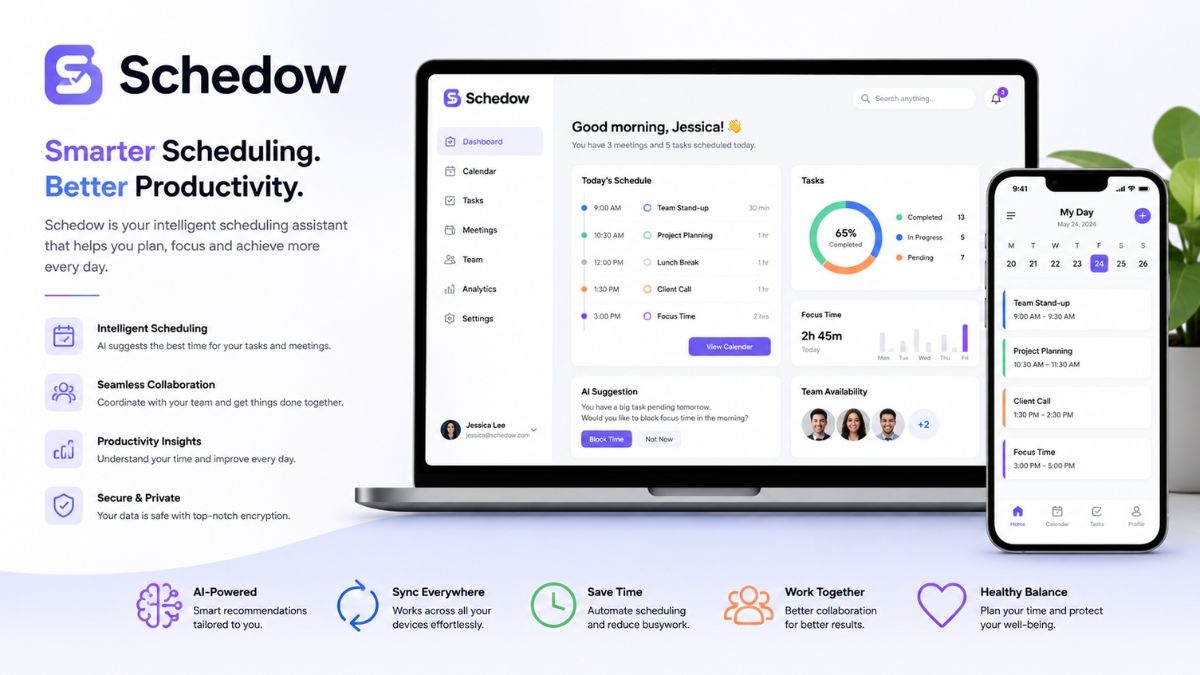
Schedow is emerging as a modern concept in the productivity and scheduling technology space. Designed around intelligent task management, seamless collaboration, and user-focused automation, Schedow represents a new generation of digital scheduling systems that aim to simplify how people plan their lives and work.
Unlike traditional calendar tools that only remind users about meetings or deadlines, Schedow focuses on creating a connected productivity ecosystem. It combines smart automation, AI-powered scheduling, collaborative workflows, and personalized time management into one streamlined platform.
As workplaces become more hybrid, remote teams continue to grow, and individuals seek healthier work-life balance, tools like Schedow are becoming increasingly important. People no longer want software that simply stores dates. They want systems that understand priorities, reduce stress, and help them work smarter.
The Growing Need for Smarter Scheduling Technology
The average person today handles dozens of digital responsibilities every week. Emails pile up, meetings overlap, and personal commitments compete with professional obligations. Traditional scheduling methods are struggling to keep up with modern demands.
Many people still rely on basic calendars or manual planners, but these systems often create problems such as:
- Missed deadlines
- Overbooked schedules
- Poor time allocation
- Lack of productivity insights
- Difficulty collaborating across teams
- Burnout from inefficient planning
Schedow addresses these challenges by introducing intelligent scheduling technology that adapts to user behavior instead of forcing users to adapt to software limitations.
The rise of artificial intelligence, cloud computing, and mobile productivity apps has opened the door for platforms like Schedow to transform the scheduling experience entirely.
What Makes Schedow Different?
One of the biggest reasons people are talking about Schedow is its human-centered design philosophy. Many productivity tools feel robotic or overly complicated. Schedow aims to create a more natural and supportive experience.
Instead of functioning like a simple digital calendar, Schedow works as a productivity assistant that actively helps users manage their time.
Some standout features include:
Intelligent Scheduling
Schedow can analyze availability, priorities, workloads, and deadlines to recommend the best scheduling options automatically.
For example, if a user has an important project deadline approaching, the system may suggest reducing unnecessary meetings or allocating more focused work sessions.
AI-Powered Recommendations
Modern users often waste mental energy deciding what to do next. Schedow helps by offering suggestions based on urgency, productivity patterns, and past behavior.
The system may recommend:
- Best meeting times
- Ideal break intervals
- Focus sessions
- Priority task ordering
- Collaboration windows
Cross-Platform Synchronization
One common frustration is using multiple apps that fail to communicate with each other. Schedow integrates calendars, communication platforms, task management systems, and cloud tools into one unified environment.
This reduces confusion and improves workflow efficiency.
Collaboration Features
Remote work has made collaboration technology essential. Schedow includes shared calendars, team availability tracking, project coordination tools, and collaborative scheduling.
Instead of endless email chains asking, “When are you available?”, Schedow automates much of the process.
How Schedow Uses Artificial Intelligence
Artificial intelligence is at the center of many modern productivity innovations, and Schedow is no exception.
AI allows the platform to move beyond static scheduling and into predictive planning.
Here are some ways AI improves the Schedow experience:
Behavioral Learning
Schedow learns how users work over time. If someone is most productive in the morning, the system may prioritize deep-focus tasks during those hours.
If another user tends to schedule too many meetings in one day, the platform can recommend healthier spacing.
Predictive Time Management
Many people underestimate how long tasks actually take. Schedow uses historical data to improve time estimation accuracy.
For instance, if weekly reports usually require three hours instead of one, the system adjusts future scheduling recommendations accordingly.
Smart Conflict Resolution
Meeting conflicts are a major workplace issue. Schedow can detect overlapping priorities and propose optimized alternatives automatically.
This reduces frustration and minimizes unnecessary communication delays.
Personalized Productivity Insights
Instead of generic productivity advice, Schedow provides insights tailored to individual habits and performance trends.
Users may receive reports such as:
- Most productive work periods
- Average task completion rates
- Time lost to interruptions
- Focus efficiency metrics
- Meeting overload warnings
Schedow and Remote Work Culture
The remote work revolution has changed how organizations operate. Flexible work environments offer many benefits, but they also introduce scheduling complexity.
Distributed teams across different time zones often struggle with:
- Communication delays
- Meeting coordination
- Project tracking
- Employee burnout
- Work-life imbalance
Schedow is designed to address these challenges through intelligent collaboration systems.
Time Zone Awareness
Global teams frequently deal with inconvenient meeting schedules. Schedow automatically identifies mutually suitable meeting windows while respecting employee working hours.
Hybrid Work Optimization
Modern companies often combine remote and office-based work models. Schedow helps coordinate hybrid schedules by managing:
- Office attendance planning
- Team availability
- Shared workspace booking
- Remote meeting synchronization
Burnout Prevention
One overlooked issue in remote work is digital exhaustion. Constant notifications, back-to-back meetings, and blurred work-life boundaries can affect mental health.
Schedow attempts to create healthier schedules by encouraging:
- Break periods
- Focus blocks
- Balanced workloads
- Reduced meeting congestion
Why Students Can Benefit from Schedow
Schedow is not limited to corporate environments. Students are also part of the growing productivity technology movement.
Modern education involves:
- Online classes
- Assignment deadlines
- Group projects
- Exam preparation
- Extracurricular activities
Managing all these responsibilities can be difficult without effective organization.
Schedow can support students by:
- Tracking deadlines
- Organizing study sessions
- Managing revision schedules
- Coordinating group work
- Reducing procrastination
Some advanced implementations could even integrate with educational platforms to provide academic planning assistance automatically.
Schedow for Freelancers and Entrepreneurs
Freelancers often wear multiple hats at once. They must manage:
- Client meetings
- Deadlines
- Invoicing
- Marketing
- Content creation
- Business development
Without structure, work can quickly become chaotic.
Schedow offers freelancers a centralized productivity environment where they can organize their entire workflow efficiently.
Client Coordination
Freelancers frequently spend too much time arranging meetings. Schedow simplifies this process using automated booking systems and availability sharing.
Task Prioritization
Independent workers must constantly balance urgent and important tasks. Schedow’s AI-driven prioritization tools can help prevent overwhelm.
Work-Life Balance
Freelancers sometimes struggle to disconnect from work. Intelligent scheduling reminders encourage healthier time management habits.
The Human Side of Productivity Technology
One reason many productivity apps fail is because they focus only on efficiency while ignoring human psychology.
People are not machines.
Energy levels change. Motivation fluctuates. Unexpected events happen. Mental fatigue affects performance.
Schedow attempts to acknowledge these realities by creating adaptive systems rather than rigid structures.
This humanized approach may include:
- Flexible scheduling
- Wellness reminders
- Adaptive deadlines
- Personalized recommendations
- Reduced cognitive overload
Instead of demanding perfection, Schedow aims to support sustainable productivity.
Potential Features of Future Schedow Platforms
As technology evolves, platforms like Schedow may become even more advanced.
Future innovations could include:
Voice-Controlled Scheduling
Users may interact with Schedow using natural voice commands such as:
- “Schedule a meeting next Thursday.”
- “Block two hours for writing.”
- “Find free time this week.”
AI Meeting Summaries
Integrated AI could automatically summarize meetings, extract action items, and schedule follow-up tasks.
Emotion-Aware Productivity
Future systems may analyze stress levels or work patterns to suggest healthier schedules and reduce burnout risk.
Smart Wearable Integration
Schedow could integrate with smartwatches and fitness devices to optimize scheduling around energy levels, sleep quality, and activity patterns.
Autonomous Workflow Management
Advanced AI may eventually handle routine scheduling tasks automatically with minimal user involvement.
Data Privacy and Security Concerns
As scheduling platforms become smarter, privacy concerns also increase.
Schedow systems may process:
- Personal calendars
- Communication data
- Productivity habits
- Location information
- Work patterns
This makes cybersecurity and ethical data handling critically important.
Users increasingly expect:
- Strong encryption
- Transparent data policies
- User-controlled permissions
- Secure cloud storage
- Limited third-party data sharing
Trust will play a major role in determining whether users adopt future scheduling technologies.
The Psychology Behind Better Scheduling
Productivity is deeply connected to psychology.
Poor scheduling often creates:
- Anxiety
- Mental clutter
- Stress
- Reduced focus
- Decision fatigue
Good scheduling systems can improve emotional well-being by creating structure and clarity.
Schedow’s approach aligns with modern productivity psychology principles such as:
- Reducing cognitive overload
- Encouraging realistic planning
- Supporting deep work
- Improving routine consistency
- Preventing overcommitment
Many users today are not looking for “maximum productivity.” They are searching for balance, clarity, and reduced stress.
Schedow in Healthcare and Professional Services
Healthcare professionals face some of the most demanding schedules in the world. Hospitals, clinics, and healthcare systems often struggle with:
- Staff coordination
- Shift management
- Emergency scheduling
- Burnout prevention
Schedow-style technology could significantly improve workforce organization in these environments.
Similarly, industries such as:
- Law firms
- Consulting agencies
- Educational institutions
- Logistics companies
- Creative studios
could benefit from intelligent scheduling automation.
How Businesses Gain Competitive Advantages
Companies that manage time effectively often outperform competitors.
Poor scheduling creates hidden costs such as:
- Delayed projects
- Missed opportunities
- Employee frustration
- Reduced collaboration
- Inefficient meetings
Schedow aims to reduce these inefficiencies by improving organizational coordination.
Benefits for businesses may include:
- Higher productivity
- Better employee satisfaction
- Faster decision-making
- Improved project visibility
- Enhanced team collaboration
In highly competitive industries, these improvements can make a significant difference.
The Rise of AI Productivity Ecosystems
Schedow reflects a broader technology trend: the rise of AI-powered productivity ecosystems.
Instead of separate apps for:
- calendars,
- tasks,
- communication,
- reminders,
- project management,
- note-taking,
modern platforms are moving toward unified intelligent systems.
Users increasingly want one ecosystem that handles everything seamlessly.
Schedow represents this next-generation vision where productivity becomes interconnected, intelligent, and adaptive.
Challenges Facing Schedow and Similar Platforms
Despite its promise, Schedow-style technology still faces several challenges.
User Resistance
Some users resist AI-driven productivity tools because they fear:
- Loss of control
- Privacy concerns
- Over-automation
- Complexity
Data Accuracy
AI recommendations are only as good as the data they receive. Poor input can reduce scheduling effectiveness.
Integration Complexity
Connecting multiple productivity tools, communication systems, and workflows is technically challenging.
Ethical AI Questions
As AI systems influence work patterns and decision-making, ethical concerns become increasingly important.
Questions include:
- How much control should AI have?
- Should employers monitor employee productivity behavior?
- Can scheduling algorithms create unhealthy expectations?
These discussions will shape the future of intelligent productivity systems.
Why Simplicity Matters
Ironically, many productivity apps become productivity problems themselves.
Complex dashboards, endless notifications, and overwhelming features can reduce efficiency instead of improving it.
One reason Schedow stands out conceptually is its focus on simplicity and usability.
Good scheduling technology should:
- Save time
- Reduce stress
- Feel intuitive
- Eliminate unnecessary friction
The best productivity tools often disappear into the background while quietly improving daily life.
The Future of Digital Time Management
The future of scheduling technology will likely become increasingly personalized.
Instead of static calendars, future systems may function more like intelligent life coordinators.
Potential developments include:
- Fully adaptive scheduling
- AI productivity coaching
- Predictive workflow planning
- Automated collaboration management
- Context-aware notifications
As artificial intelligence becomes more advanced, scheduling platforms may evolve from passive tools into active productivity partners.
Schedow represents part of this broader transformation.
Final Thoughts
Technology continues to reshape how people work, communicate, and organize their lives. In this evolving landscape, platforms like Schedow highlight the growing demand for smarter, more human-centered productivity systems.
People no longer want basic digital calendars that simply store appointments. They want intelligent systems that understand priorities, reduce stress, support collaboration, and improve overall well-being.
Schedow symbolizes the next step in scheduling innovation — combining artificial intelligence, automation, personalization, and human psychology into a more balanced productivity experience.
Whether used by students, freelancers, remote teams, healthcare organizations, or global enterprises, the future of scheduling technology is clearly moving toward intelligent ecosystems that help people manage both time and energy more effectively.
As digital workloads continue to grow, solutions like Schedow may become essential tools for navigating modern life with greater clarity, efficiency, and balance.