Table of Contents
- What Is URLWO?
- Why URLs Matter More Than Ever
- The Evolution of URL Optimization
- Core Principles of a Strong URLWO Strategy
- How URLWO Affects Rankings and User Trust
- Creating a Scalable URL Structure
- Common URLWO Mistakes to Avoid
- Advanced URLWO Techniques
- URLWO and Technical SEO
- Using URLWO for Content Strategy
- Real Examples of Effective URL Structures
- How to Audit Your Current URLs
- Final Thoughts
- FAQs
What Is URLWO?
In the world of search engine optimization, URLs are often treated like background details. Most website owners focus heavily on content, backlinks, keywords, and page speed while ignoring the structure of their web addresses. That is exactly where URLWO changes the conversation.
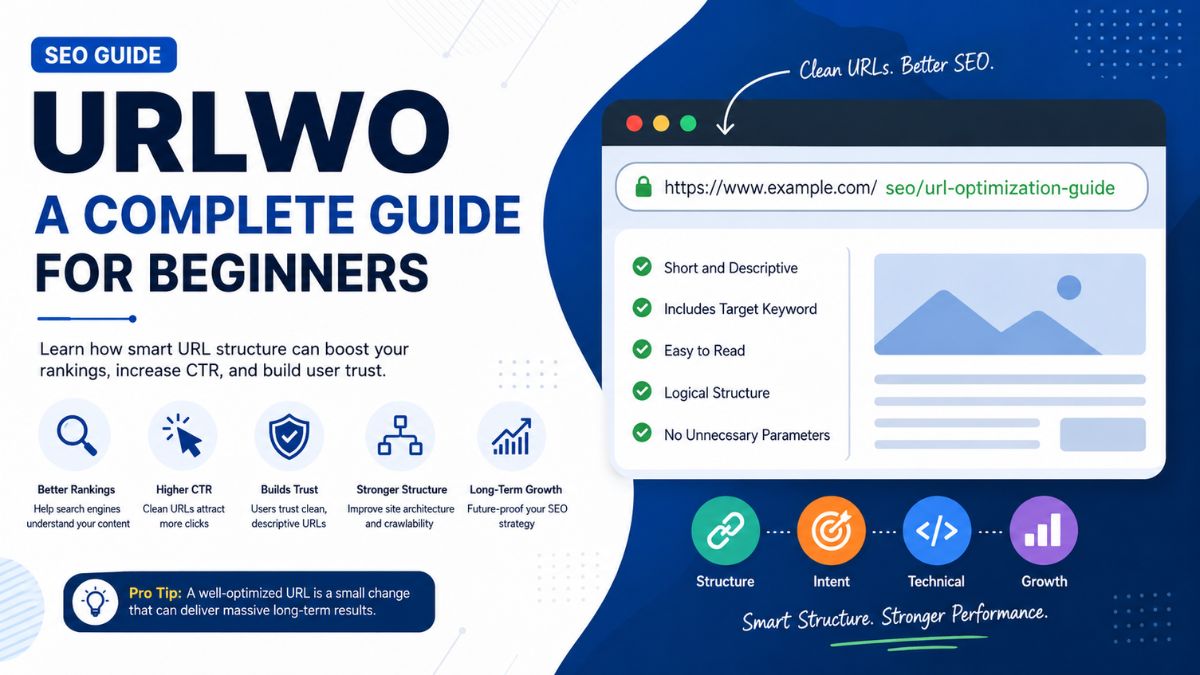
URLWO is a strategic approach to URL optimization that focuses on clarity, intent, scalability, and search relevance. Instead of seeing URLs as automatic byproducts of publishing content, URLWO treats them as an essential part of a website’s SEO architecture.
A URL is more than a simple address. It tells search engines what a page is about, shows users where they are on a site, and contributes to how trustworthy a page appears in search results.
Consider these two URLs:
example.com/p=4729&id=883example.com/seo/url-optimization-guide
The second version immediately communicates value and purpose. Users understand the topic before even clicking the page. Search engines also gain stronger contextual signals.
That is the foundation of URLWO: turning URLs into meaningful SEO assets instead of random technical strings.
Why URLs Matter More Than Ever
Modern search engines are far more intelligent than they were a decade ago. Algorithms now evaluate context, topical relationships, semantic meaning, and user behavior at scale.
Although URLs are not the single most powerful ranking factor, they still influence several important SEO elements:
- Crawlability
- Indexing
- User trust
- Click-through rate
- Internal linking clarity
- Content organization
- Topic relevance
When users see a clean URL in search results, they are more likely to trust the page. Confusing URLs filled with symbols, dates, and meaningless parameters create hesitation.
For example:
example.com/blog/2022/09/post-id-9493example.com/local-seo-guide
One looks useful. The other looks automated.
This psychological difference affects clicks more than many website owners realize.
The Evolution of URL Optimization
Early SEO Practices
In the early years of SEO, URLs were designed primarily for systems rather than humans. Websites commonly used long parameter-based structures like:
example.com/index.php?id=493&cat=22
These URLs technically worked, but they offered no clarity to users or search engines.
As SEO matured, website owners began inserting keywords into URLs to improve visibility. This led to cleaner structures, but many websites still approached URLs as isolated elements rather than strategic assets.
The Shift Toward Semantic SEO
Modern SEO focuses heavily on search intent and topical authority. Search engines no longer look only at isolated keywords. They analyze relationships between pages, user experience signals, and semantic relevance.
That shift transformed URL optimization.
Today, URLs work best when they:
- Reflect topic hierarchy
- Support site architecture
- Match user intent
- Improve navigation
- Reinforce semantic relationships
This broader philosophy is what defines URLWO.
Core Principles of a Strong URLWO Strategy
A successful URLWO framework relies on several foundational principles.
1. Readability
URLs should be understandable immediately.
Good example:
example.com/email-marketing-strategies
Poor example:
example.com/post?id=83374
Readable URLs improve both user trust and search clarity.
2. Intent Alignment
Every URL should reflect the purpose of the page.
If the content is a beginner’s guide to technical SEO, the URL should clearly communicate that.
Example:
example.com/technical-seo-beginners-guide
Intent alignment helps search engines categorize content accurately.
3. Strategic Keyword Usage
Keywords still matter in URLs, but moderation is critical.
Bad practice:
example.com/best-seo-seo-guide-seo-tips
Better approach:
example.com/seo-guide
The goal is clarity, not repetition.
4. Consistency
A website should follow a unified structure across all pages.
For example:
/blog/article-name/services/service-name/guides/topic-name
Consistency strengthens crawl efficiency and improves site organization.
5. Simplicity
Shorter URLs generally perform better because they are:
- Easier to read
- Easier to remember
- Easier to share
- Easier to crawl
This does not mean removing useful context. It means eliminating unnecessary clutter.
How URLWO Affects Rankings and User Trust
Search Engine Relevance
URLs contribute contextual signals that help search engines understand page topics.
While content quality remains the primary factor, optimized URLs reinforce relevance.
For example:
example.com/wordpress-speed-optimization
This instantly tells search engines the page topic.
Improved Click-Through Rates
Users naturally prefer clean URLs.
A descriptive URL creates confidence because it looks organized and professional.
Studies consistently show that users are more likely to click readable URLs compared to random or confusing structures.
Long-Term Stability
Stable URLs help preserve rankings over time.
Changing URLs repeatedly can:
- Break backlinks
- Reduce authority
- Create redirect chains
- Confuse search engines
URLWO emphasizes creating future-proof URLs from the beginning.
Creating a Scalable URL Structure
A scalable structure becomes increasingly important as websites grow.
Without a clear system, websites eventually develop:
- Duplicate paths
- Confusing hierarchies
- Overlapping categories
- Crawl inefficiencies
Building Logical Hierarchies
A good URL reflects the relationship between pages.
Example:
example.com/seo/on-page-seoexample.com/seo/technical-seoexample.com/seo/link-building
This organization strengthens topical authority.
Avoiding Deep URL Structures
Overly deep URLs reduce clarity.
Poor structure:
example.com/blog/marketing/digital/seo/technical/guides/advanced/url-optimization
Better structure:
example.com/technical-seo/url-optimization
Shallow architecture improves usability and crawlability.
Standardizing URL Patterns
Consistency should apply to:
- Hyphen usage
- Folder naming
- Capitalization
- Category logic
- Trailing slashes
Uniform patterns reduce technical confusion.
Common URLWO Mistakes to Avoid
Even strong websites frequently make avoidable URL mistakes.
Keyword Stuffing
Overusing keywords makes URLs look spammy.
Bad example:
example.com/best-cheap-best-seo-tools-online
Clean example:
example.com/seo-tools
Auto-Generated Slugs
Content management systems often create poor URLs automatically.
Example:
example.com/how-to-improve-your-website-ranking-fast-in-2026
Refined version:
example.com/improve-website-ranking
Editing URLs before publishing is essential.
Using Dates Unnecessarily
Dates can make evergreen content appear outdated.
Instead of:
example.com/2024/seo-tips
Use:
example.com/seo-tips
This preserves long-term value.
Ignoring Redirects
Changing URLs without proper redirects causes serious SEO damage.
Always use permanent 301 redirects when modifying URLs.
Advanced URLWO Techniques
Once the fundamentals are mastered, advanced optimization can create additional advantages.
Canonical URL Management
Many websites unintentionally create duplicate URLs through parameters or tracking tags.
Canonical tags help search engines identify the preferred page version.
This prevents duplicate content issues.
Search Intent Optimization
Advanced URLWO focuses less on exact-match keywords and more on broader topical alignment.
Instead of:
example.com/best-running-shoes-under-100
You might use:
example.com/affordable-running-shoes
This broadens ranking opportunities.
Topic Cluster Structuring
URLs can reinforce content clusters.
Example:
/email-marketing//email-marketing/automation/email-marketing/newsletters/email-marketing/segmentation
This structure strengthens semantic relationships.
URLWO and Technical SEO
URL optimization works best when integrated with technical SEO.
Crawl Budget Efficiency
Search engines allocate limited crawl resources to websites.
Clean URL structures help crawlers prioritize valuable pages instead of wasting resources on duplicates or unnecessary variations.
XML Sitemap Alignment
Your sitemap should mirror your URL hierarchy.
This creates stronger architectural clarity.
Internal Linking Benefits
Logical URLs improve internal linking naturally.
For example:
example.com/content-marketing/strategy
immediately fits within a content marketing topic cluster.
Redirect Management
Poor redirect practices create:
- Redirect chains
- Crawl inefficiencies
- Ranking dilution
A proper URLWO strategy minimizes unnecessary redirects.
Using URLWO for Content Strategy
URLWO becomes even more powerful when connected to long-term content planning.
Building Topical Authority
Search engines increasingly reward websites with deep expertise in specific niches.
URL clusters reinforce this expertise.
Example:
/fitness/nutrition/fitness/workouts/fitness/strength-training
This structure signals subject depth.
Improving Scalability
As websites grow, organization becomes more difficult.
A structured URL system allows new content to fit naturally into existing categories.
Supporting Evergreen Content
Evergreen content benefits from stable URLs.
Avoid trends or unnecessary date references unless freshness is critical.
Real Examples of Effective URL Structures
Here are examples of strong URLWO implementation.
| Poor URL | Optimized URL |
|---|---|
/post?id=3394 |
/technical-seo-guide |
/blog/2023/09/article-title |
/article-title |
/category/subcategory/topic/article |
/topic/article |
/best-seo-tools-best-seo-guide |
/seo-tools-guide |
The difference appears small, but these refinements compound across large websites.
How to Audit Your Current URLs
A URL audit helps identify weaknesses in site architecture.
Step 1: Review Existing URLs
Look for:
- Long URLs
- Parameter-heavy URLs
- Duplicate structures
- Keyword stuffing
- Inconsistent formatting
Step 2: Analyze Hierarchy
Ask:
- Does the structure make sense?
- Are categories logical?
- Are URLs unnecessarily deep?
Step 3: Identify Duplicate Pages
Multiple URLs targeting the same intent weaken authority.
Consolidate duplicates where necessary.
Step 4: Improve Carefully
When updating URLs:
- Implement 301 redirects
- Update internal links
- Refresh sitemap entries
- Monitor indexing
Improper changes can harm SEO.
Final Thoughts
URLWO is not about cosmetic improvements. It is about building a smarter SEO foundation.
In a highly competitive digital environment, small technical advantages often create significant long-term gains. Clean, intentional URLs improve user trust, strengthen architecture, support topical relevance, and help search engines understand your content more effectively.
Most websites overlook this layer entirely.
That creates opportunity.
A strong URLWO strategy ensures that every page contributes to a cohesive, scalable, and future-ready SEO framework. It removes friction, improves clarity, and supports sustainable growth over time.
The websites that consistently perform well in search are rarely strong because of one tactic alone. They succeed because every layer of optimization works together — and URLs are one of those critical layers.
FAQs
What does URLWO mean?
URLWO refers to a strategic method of URL optimization focused on clarity, relevance, search intent, and scalable SEO architecture.
Do URLs still matter for SEO in 2026?
Yes. While URLs are not the strongest ranking factor, they significantly influence crawlability, user trust, click-through rates, and topical relevance.
Should every URL contain a keyword?
Not necessarily. Keywords should appear naturally where they improve clarity and relevance.
Are shorter URLs better?
In most cases, yes. Short URLs are easier to read, remember, share, and crawl.
Can changing URLs hurt rankings?
Yes, if done incorrectly. Always use proper 301 redirects and update internal links when modifying URLs.
What is the biggest URL optimization mistake?
The most common mistake is creating cluttered, inconsistent URLs that confuse users and search engines.