Technology is evolving faster than ever before. Every year, millions of smartphones, laptops, tablets, servers, and electronic accessories become outdated. While innovation pushes society forward, it also creates one of the world’s fastest-growing environmental problems: electronic waste, commonly known as e-waste.
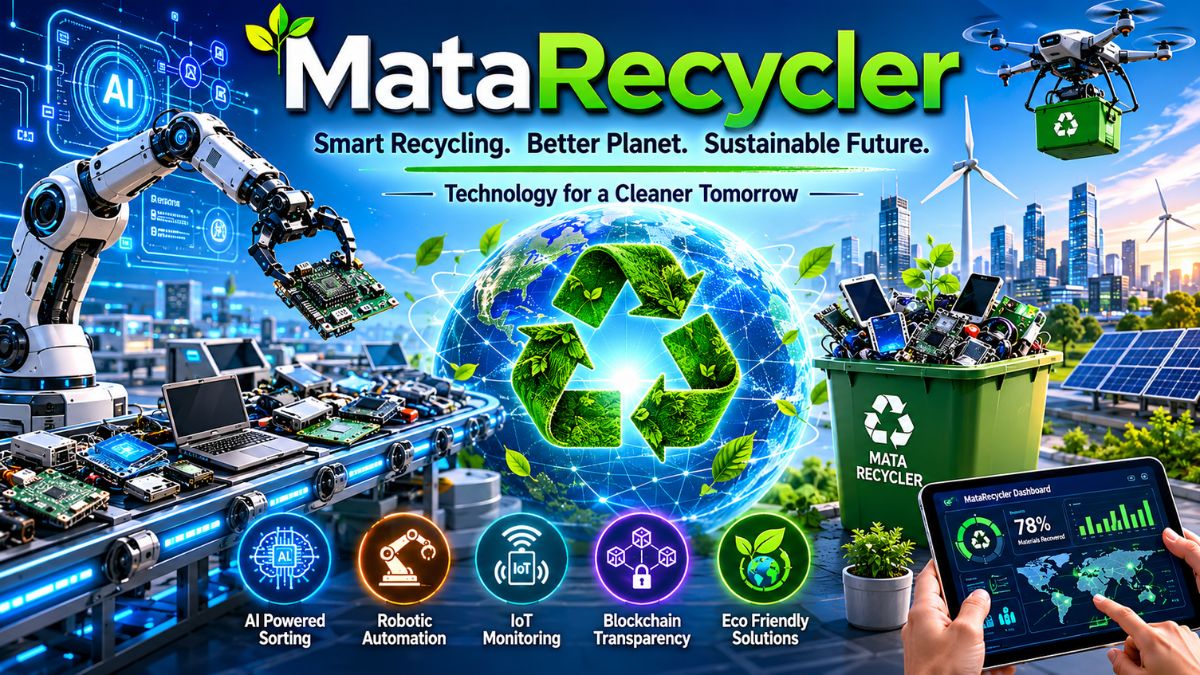
In the middle of this growing challenge, a futuristic concept known as MataRecycler is emerging as a transformative solution. MataRecycler represents the next generation of intelligent recycling systems powered by artificial intelligence, automation, robotics, blockchain tracking, and smart environmental analytics. Rather than treating recycling as a manual waste-management process, MataRecycler envisions a connected ecosystem where technology itself becomes responsible for recovering, reusing, and regenerating valuable resources.
This blog explores what MataRecycler is, how it works, its technologies, benefits, challenges, and its future impact on sustainability and the circular economy.
Understanding MataRecycler
MataRecycler is a conceptual advanced recycling ecosystem designed to intelligently process electronic and digital waste using modern technologies such as:
- Artificial Intelligence (AI)
- Machine Learning (ML)
- Robotics
- Internet of Things (IoT)
- Blockchain
- Smart Sensors
- Automated Sorting Systems
- Data Analytics
- Cloud Computing
The term combines the idea of “meta” intelligence with modern recycling practices. MataRecycler is not simply a recycling machine; it is an interconnected digital platform capable of identifying, sorting, dismantling, and repurposing electronic materials efficiently and sustainably.
Unlike traditional recycling systems, which rely heavily on manual labor and inconsistent processes, MataRecycler introduces intelligent automation to maximize recovery and minimize environmental damage.
Why the World Needs MataRecycler
Electronic waste is becoming one of the largest environmental concerns globally.
According to international environmental studies, the world generates tens of millions of metric tons of e-waste every year. Unfortunately, only a small percentage is properly recycled. The rest often ends up in landfills, where toxic materials contaminate soil, water, and air.
Common Sources of E-Waste
- Smartphones
- Desktop computers
- Laptops
- Tablets
- Batteries
- Smartwatches
- Networking equipment
- Household electronics
- Gaming consoles
- Medical electronics
Many of these devices contain valuable metals such as:
- Gold
- Silver
- Copper
- Lithium
- Palladium
- Rare earth elements
Improper disposal wastes these resources while also harming the environment.
MataRecycler addresses this issue by creating an intelligent infrastructure for recovering materials and reducing waste generation.
The Core Technologies Behind MataRecycler
Artificial Intelligence
AI acts as the brain of MataRecycler systems.
Using computer vision and deep learning algorithms, AI can identify different electronic components automatically. Cameras and sensors scan devices, while AI determines:
- Material composition
- Device category
- Hazardous components
- Recyclable value
- Repair potential
AI systems continue learning over time, improving sorting accuracy and operational efficiency.
Robotics and Automation
Traditional recycling often involves dangerous manual dismantling. MataRecycler replaces much of this work with robotic systems.

- Remove batteries safely
- Separate plastics and metals
- Unscrew delicate components
- Handle toxic materials
- Sort devices by category
Automation speeds up recycling while reducing human exposure to hazardous substances.
Internet of Things (IoT)
IoT sensors create real-time monitoring across the recycling ecosystem.
Smart bins, collection centers, and processing facilities communicate continuously to provide information such as:
- Waste volume
- Device type
- Temperature conditions
- Hazard alerts
- Operational performance
This connectivity helps optimize logistics and reduce energy consumption.
Blockchain for Transparency
One of the biggest problems in recycling industries is the lack of transparency.
Blockchain technology can track electronic products from manufacturing to disposal. Every device receives a digital identity that records:
- Manufacturing data
- Ownership history
- Repair history
- Recycling status
- Material recovery
This creates accountability and supports a circular economy.
Cloud Computing and Big Data
MataRecycler relies heavily on cloud-based analytics platforms.
Millions of recycling records can be analyzed to identify trends such as:
- Most discarded products
- High-value materials
- Consumer behavior
- Regional waste patterns
- Environmental impact
These insights help governments and companies improve sustainability strategies.
How MataRecycler Works
The MataRecycler process can be divided into several intelligent stages.
Stage 1: Smart Collection
The first step involves collecting electronic waste through intelligent infrastructure.

- Smart recycling kiosks
- IoT-enabled collection bins
- Mobile recycling drones
- Automated pickup systems
Consumers can deposit devices into smart stations that instantly identify the product type.
Some advanced systems may even provide rewards or digital credits for recycling responsibly.
Stage 2: AI-Based Identification
Once collected, devices are scanned using:
- X-ray imaging
- Infrared sensors
- Computer vision
- RFID technology
AI software determines whether a device should be:
- Repaired
- Refurbished
- Reused
- Recycled
- Disassembled
This prevents unnecessary destruction of reusable electronics.
Stage 3: Automated Disassembly
Robotic arms dismantle devices carefully and efficiently.

- Removing batteries
- Extracting circuit boards
- Separating metals
- Recovering plastics
- Isolating hazardous materials
The system minimizes waste contamination and improves material purity.
Stage 4: Material Recovery
Recovered materials are refined and categorized.
Advanced technologies extract:
- Gold from connectors
- Copper from wiring
- Lithium from batteries
- Aluminum from casings
- Rare earth metals from electronics
This reduces dependence on mining operations and preserves natural resources.
Stage 5: Circular Reuse
The final stage involves reintegrating recovered materials into manufacturing.
Companies can use recycled materials to produce:
- New smartphones
- Electric vehicle batteries
- Solar panels
- Consumer electronics
- Industrial equipment
This creates a sustainable circular economy.
Key Benefits of MataRecycler
Environmental Protection
MataRecycler dramatically reduces pollution caused by improper e-waste disposal.
Benefits include:
- Lower landfill waste
- Reduced toxic leakage
- Less air pollution
- Reduced mining damage
- Lower carbon emissions
Environmental sustainability becomes more achievable when materials are reused instead of discarded.
Resource Conservation
Modern electronics contain limited rare earth materials.
By recovering these resources efficiently, MataRecycler helps conserve valuable global reserves.
This is especially important for technologies such as:
- Electric vehicles
- Renewable energy systems
- AI hardware
- Semiconductor manufacturing
Economic Opportunities
The recycling industry itself can become a massive economic sector.

- Robotics engineering
- AI development
- Sustainability consulting
- Logistics management
- Smart manufacturing
- Environmental analytics
It also creates opportunities for startups focused on green technology.
Improved Public Awareness
Smart recycling platforms educate consumers about sustainability.
Mobile applications connected to MataRecycler systems may show:
- Personal recycling statistics
- Environmental impact savings
- Carbon reduction achievements
- Reward programs
Gamification encourages responsible behavior.
Safer Recycling Processes
Traditional e-waste recycling can expose workers to:
- Lead
- Mercury
- Cadmium
- Toxic fumes
Automation reduces human exposure to dangerous materials and improves workplace safety.
MataRecycler and Artificial Intelligence
AI is the driving force behind MataRecycler.
Machine learning systems continuously improve recycling efficiency by analyzing enormous datasets.
AI Applications in MataRecycler
Object Recognition
AI identifies devices instantly using visual recognition systems.
Material Classification
Algorithms determine the composition of materials automatically.
Predictive Maintenance
AI predicts machine failures before they happen.
Logistics Optimization
AI optimizes transportation routes and collection schedules.
Waste Forecasting
Machine learning predicts future waste trends for better planning.
Smart Cities and MataRecycler
Future smart cities may integrate MataRecycler systems directly into urban infrastructure.
- Smart recycling stations
- Autonomous waste collection vehicles
- Real-time environmental monitoring
- AI-controlled processing centers
- Citizen sustainability dashboards
Cities could dramatically reduce environmental impact while improving operational efficiency.
MataRecycler in the Era of Electric Vehicles
Electric vehicles (EVs) rely heavily on lithium-ion batteries.
As EV adoption grows, battery recycling becomes increasingly important.
MataRecycler systems could:
- Recover lithium efficiently
- Recycle cobalt safely
- Extend battery life
- Support second-life battery applications
This is essential for sustainable transportation.
Data Security in Electronic Recycling
Many discarded devices still contain sensitive data.
MataRecycler introduces secure digital destruction systems that:
- Wipe storage devices
- Encrypt disposal records
- Verify data destruction
- Maintain compliance standards
This protects consumer privacy while encouraging responsible disposal.
MataRecycler and the Circular Economy
The traditional economy follows a linear model:
Produce → Use → Dispose
MataRecycler supports a circular model:
Produce → Use → Recover → Reuse → Reproduce
This approach minimizes waste and maximizes resource efficiency.
Circular economies are becoming central to global sustainability strategies.
The Role of Governments
Governments can accelerate MataRecycler adoption through:
- Recycling regulations
- Tax incentives
- Smart city funding
- Green technology investments
- Public awareness campaigns
Many countries are already implementing stricter e-waste policies to encourage sustainable recycling.
Corporate Responsibility and MataRecycler
Technology companies increasingly face pressure to improve sustainability.
Major electronics manufacturers may use MataRecycler systems to:
- Recover old products
- Reduce manufacturing waste
- Meet environmental targets
- Improve brand reputation
Companies that adopt sustainable practices often gain stronger consumer trust.
Challenges Facing MataRecycler
Despite its promise, MataRecycler faces several challenges.
High Initial Costs
Advanced robotics and AI infrastructure require significant investment.
Smaller regions may struggle to afford:
- Automated facilities
- Sensor networks
- AI platforms
- Smart logistics systems
However, long-term savings can offset initial costs.
Technological Complexity
Building intelligent recycling ecosystems requires expertise in:
- AI engineering
- Robotics
- Environmental science
- Cloud computing
- Data analytics
Cross-disciplinary collaboration is essential.
Consumer Participation
Even the best recycling system fails if consumers do not participate.
Public education and convenient collection systems are necessary for success.
Regulatory Challenges
Different countries have varying recycling regulations.
Global coordination is needed to standardize sustainable recycling practices.
Cybersecurity Risks
Connected recycling systems may become targets for cyberattacks.
Strong cybersecurity frameworks are essential to protect infrastructure and sensitive data.
Future Innovations in MataRecycler
The future of MataRecycler could include groundbreaking technologies.
Self-Learning Recycling Systems
Future AI systems may autonomously improve recycling methods without human intervention.
These systems could adapt to new products automatically.
Drone-Based Waste Collection

This would make recycling more accessible and efficient.
Molecular Recycling
Advanced chemical technologies may eventually break materials down at molecular levels for complete recovery.
This could revolutionize sustainability.
Digital Twin Recycling Facilities
Digital twin technology can simulate recycling plants virtually.
Engineers can test improvements before implementing physical changes.
Space Recycling Technologies
As humanity expands into space exploration, sustainable recycling systems will become critical for long-term missions.
MataRecycler concepts could eventually support:
- Lunar bases
- Mars colonies
- Orbital manufacturing stations
MataRecycler and Education
Educational institutions can integrate MataRecycler concepts into STEM programs.
Students may learn:
- Sustainable engineering
- Robotics
- Environmental science
- AI programming
- Circular economy principles
This prepares future generations for green technological careers.
MataRecycler Startups and Innovation
The green technology sector is attracting major investment.
New startups are developing innovations in:
- Battery recycling
- AI waste sorting
- Sustainable manufacturing
- Smart logistics
- Plastic recovery
MataRecycler-inspired ecosystems could become one of the defining industries of the future.
Global Impact of MataRecycler
If adopted globally, MataRecycler could help address several major environmental issues:
- E-waste pollution
- Resource depletion
- Carbon emissions
- Toxic contamination
- Unsustainable mining
The technology represents more than recycling; it represents a shift toward intelligent sustainability.
The Human Side of Sustainable Technology
Technology alone cannot solve environmental problems.
Human responsibility remains essential.
MataRecycler succeeds only when:
- Consumers recycle responsibly
- Governments create supportive policies
- Companies design sustainable products
- Engineers prioritize environmental ethics
The future depends on collective action.
MataRecycler and Sustainable Product Design
Future electronics may be designed specifically for easier recycling.
Manufacturers could create modular products that:
- Use fewer toxic materials
- Allow simple disassembly
- Extend device lifespan
- Simplify material recovery
Designing products for recyclability reduces environmental impact from the start.
Green AI and Energy Efficiency
AI systems themselves consume energy.
Future MataRecycler platforms may use:
- Renewable-powered data centers
- Energy-efficient processors
- Carbon-neutral AI models
Balancing AI growth with sustainability will be important.
Public Awareness Campaigns
For MataRecycler to succeed globally, awareness campaigns will play a major role.
- Proper e-waste disposal
- Environmental risks
- Recycling benefits
- Sustainable consumption
Public engagement drives long-term success.
The Future Vision of MataRecycler
Imagine a future where every electronic product has a digital recycling identity.
When devices become obsolete:
- AI systems identify optimal recovery methods
- Robots dismantle products automatically
- Materials return to manufacturing cycles
- Waste approaches zero
Cities become cleaner, resources last longer, and technology supports sustainability rather than harming it.
This is the vision of MataRecycler.
Final Thoughts
MataRecycler represents a bold vision for the future of intelligent recycling and sustainable technology. By combining AI, robotics, IoT, blockchain, and automation, it transforms waste management into a smart, efficient, and environmentally responsible ecosystem.
As global electronic consumption continues to rise, innovative systems like MataRecycler may become essential for protecting the planet and conserving valuable resources.
The future of technology is not only about faster devices and smarter machines. It is also about creating systems that respect environmental balance and support long-term sustainability.
MataRecycler symbolizes this future a world where technology and environmental responsibility work together rather than against each other.