Healthcare is one of the most demanding industries in the world. Hospitals operate around the clock, medical emergencies can happen at any time, and patient care depends heavily on having the right professionals available at the right moment. Behind every successful healthcare system lies a complex structure of scheduling, staffing, communication, and workforce coordination. Managing all these responsibilities manually can quickly become overwhelming, especially for large healthcare organizations.
This is where Smart Square HMH has emerged as a powerful solution. Designed specifically for healthcare workforce management, Smart Square HMH helps hospitals streamline scheduling, optimize staffing, improve communication, and enhance operational efficiency. In an industry where every minute matters, technology-driven workforce platforms like Smart Square HMH are transforming how hospitals function.
The Growing Need for Workforce Management in Healthcare
Modern healthcare systems face increasing pressure from several directions. Rising patient volumes, workforce shortages, burnout among healthcare workers, compliance regulations, and cost management challenges have made efficient workforce coordination more important than ever.
Hospitals must balance several factors simultaneously:
- Maintaining patient safety
- Preventing staff burnout
- Managing labor costs
- Ensuring compliance with healthcare regulations
- Responding quickly to emergencies
- Adapting to fluctuating patient demands
Traditional scheduling methods such as spreadsheets, paper rosters, phone calls, and manual approvals are no longer sufficient for large healthcare networks. These outdated methods often lead to scheduling conflicts, communication gaps, staffing shortages, and administrative inefficiencies.
Smart workforce management systems provide a modern alternative. Smart Square HMH represents one of the leading examples of how digital technology is reshaping healthcare administration.
What Is Smart Square HMH?
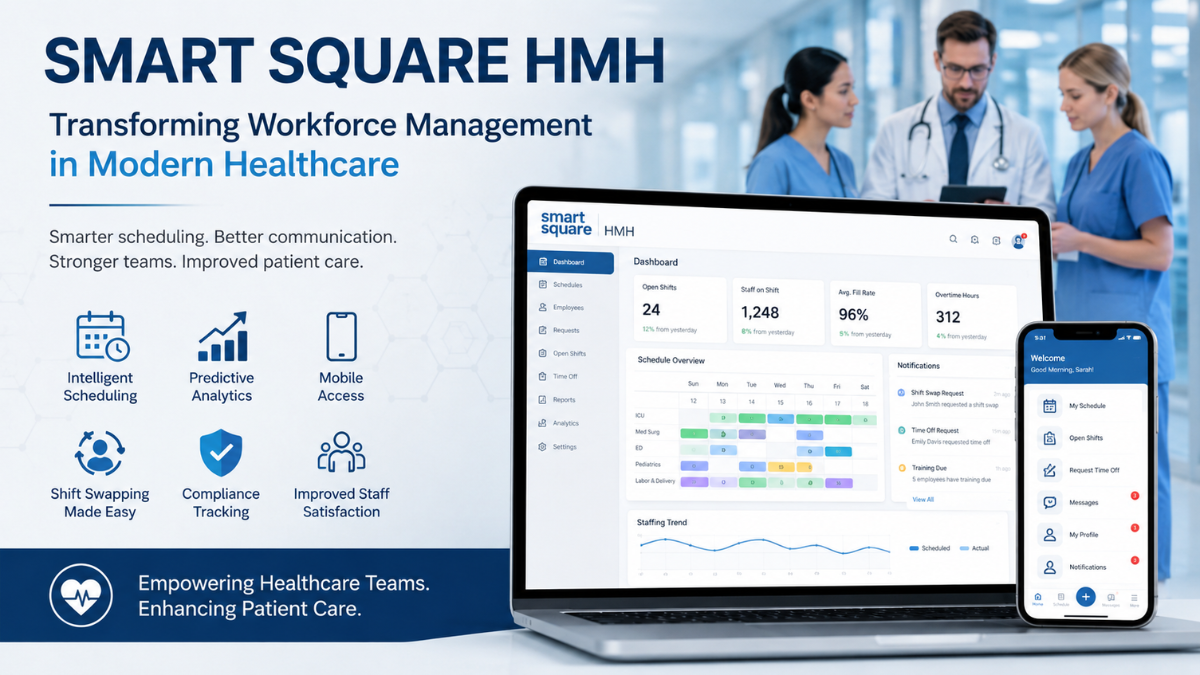
Smart Square HMH is a healthcare workforce management platform used by Hackensack Meridian Health (HMH), one of the largest healthcare organizations in the United States. The platform is designed to simplify and automate employee scheduling, staffing allocation, communication, reporting, and workforce planning.
Unlike general-purpose scheduling software, Smart Square HMH was built specifically for healthcare environments. Hospitals and medical centers operate differently from traditional businesses because staffing demands can change rapidly depending on patient conditions, emergencies, seasonal illnesses, or public health events.
The platform combines scheduling automation with predictive analytics and real-time workforce monitoring. This enables administrators to make informed staffing decisions while ensuring that healthcare professionals have better visibility and control over their schedules.
Image: Modern Digital Healthcare Workforce Management

Understanding How Smart Square HMH Works
At its core, Smart Square HMH acts as a centralized workforce management system. It collects staffing information, employee availability, scheduling requirements, and operational data into a single digital platform.
Hospital administrators can use the system to:
- Create schedules
- Assign shifts
- Manage staffing shortages
- Monitor overtime
- Track employee credentials
- Approve time-off requests
- Analyze workforce trends
Meanwhile, employees such as nurses, physicians, technicians, and support staff can:
- View schedules
- Request shift swaps
- Pick up open shifts
- Receive alerts and updates
- Submit leave requests
- Access schedules remotely
This two-way functionality creates a more transparent and flexible scheduling environment for both management and healthcare workers.
Key Features of Smart Square HMH
One reason Smart Square HMH has become popular in healthcare environments is the broad range of features it offers. Each function is designed to solve a specific workforce management challenge commonly faced by hospitals.
1. Intelligent Staff Scheduling
One of the most valuable features of Smart Square HMH is its intelligent scheduling capability.
Healthcare scheduling is extremely complex because hospitals must consider factors such as:
- Staff qualifications
- Department requirements
- Shift preferences
- Labor laws
- Overtime limits
- Emergency coverage
- Skill mix balance
The platform uses automation and real-time data to generate optimized schedules that meet organizational needs while reducing administrative effort.
For example, a hospital intensive care unit may require a certain number of critical care nurses during peak hours. Smart Square HMH helps ensure those staffing levels are maintained without overloading employees.
This leads to:
- Better workforce distribution
- Reduced scheduling conflicts
- Improved patient care coverage
- Lower administrative workload
2. Predictive Analytics and Forecasting
Predictive analytics is one of the most advanced aspects of Smart Square HMH.
The system analyzes historical workforce and patient data to forecast future staffing requirements. It can identify patterns related to:
- Seasonal illness trends
- Patient admission spikes
- Holiday staffing needs
- Emergency demand increases
- Department workload fluctuations
For example, hospitals often experience higher patient volumes during flu season. Smart Square HMH can anticipate these increases and recommend appropriate staffing adjustments ahead of time.
Predictive analytics allows healthcare organizations to become proactive instead of reactive.
Benefits include:
- Better preparedness
- Reduced understaffing
- Improved operational planning
- Enhanced financial management
Image: Healthcare Analytics and Staffing Forecasting

3. Mobile Accessibility
Healthcare professionals rarely spend their day sitting at a desk. Nurses, physicians, and medical staff are constantly moving between departments, patient rooms, and emergency situations.
Smart Square HMH supports mobile access, allowing staff to interact with the platform from smartphones and tablets.
Mobile features include:
- Viewing schedules
- Receiving notifications
- Managing shifts
- Responding to staffing requests
- Accessing updates remotely
This flexibility improves communication and allows employees to stay informed even when away from hospital workstations.
In high-pressure healthcare environments, mobile accessibility can significantly improve response times and coordination.
4. Shift Swapping and Open Shift Management
Unexpected events happen frequently in healthcare. Employees may need schedule adjustments due to emergencies, illness, family responsibilities, or changing availability.
Smart Square HMH simplifies this process through automated shift management tools.
Staff can:
- Request shift swaps
- Volunteer for open shifts
- Submit time-off requests
- Receive approval notifications
Managers can review requests quickly without lengthy phone calls or paperwork.
This improves:
- Scheduling flexibility
- Employee satisfaction
- Team communication
- Workforce coverage
Healthcare workers appreciate systems that provide more control over their schedules, and Smart Square HMH supports that flexibility.
5. Centralized Dashboard
Healthcare operations generate massive amounts of information daily. Without centralized systems, communication breakdowns and scheduling errors become more likely.
Smart Square HMH provides a unified dashboard where administrators can monitor workforce activity in real time.
The dashboard may include:
- Staff availability
- Shift coverage
- Overtime alerts
- Pending requests
- Compliance notifications
- Staffing gaps
This centralized visibility allows managers to make quick and informed decisions.
Instead of searching through spreadsheets or emails, all critical workforce information is available in one location.
6. Compliance and Credential Tracking
Healthcare organizations operate under strict regulations and credentialing requirements.
Hospitals must ensure that employees maintain valid:
- Licenses
- Certifications
- Training records
- Compliance documentation
Scheduling an employee with expired credentials could create serious legal and patient safety risks.
Smart Square HMH helps automate credential tracking and sends alerts when certifications approach expiration.
This feature improves:
- Regulatory compliance
- Patient safety
- Administrative accuracy
- Risk management
Benefits of Smart Square HMH for Healthcare Organizations
The impact of Smart Square HMH extends beyond scheduling convenience. The platform contributes to broader organizational improvements that affect patient care, staff morale, operational performance, and financial efficiency.
Improved Patient Care
Patient care is directly connected to staffing quality.
When hospitals are understaffed:
- Response times increase
- Employee fatigue rises
- Medical errors become more likely
- Patient satisfaction declines
Smart Square HMH helps maintain appropriate staffing levels so healthcare professionals can focus on delivering quality care rather than struggling with workforce shortages.
Well-balanced schedules also reduce employee exhaustion, which contributes to safer and more effective patient treatment.
Reduced Administrative Workload
Manual scheduling can consume countless hours every week.
Administrators often spend significant time:
- Calling employees
- Updating schedules
- Handling shift requests
- Resolving conflicts
- Managing overtime
Automation dramatically reduces these repetitive tasks.
By streamlining administrative workflows, Smart Square HMH allows leadership teams to focus on strategic healthcare priorities instead of paperwork.
Image: Nurses and Healthcare Professionals Collaborating

Enhanced Staff Satisfaction
Healthcare professionals work in demanding environments that can lead to stress and burnout.
One major source of frustration is scheduling uncertainty.
Employees value:
- Predictable schedules
- Transparent communication
- Flexible shift management
- Fair workload distribution
Smart Square HMH improves the employee experience by giving staff more visibility and control over their schedules.
Better scheduling transparency can improve morale, reduce frustration, and support long-term employee retention.
Better Cost Management
Labor costs represent one of the largest expenses for hospitals.
Overstaffing wastes financial resources, while understaffing creates operational risks and overtime expenses.
Smart Square HMH helps healthcare organizations optimize staffing efficiency by aligning workforce allocation with actual patient demand.
This contributes to:
- Reduced unnecessary overtime
- Better resource utilization
- More accurate budgeting
- Improved financial performance
Increased Operational Efficiency
Healthcare organizations function more effectively when scheduling, staffing, communication, and reporting systems work together seamlessly.
Smart Square HMH creates a connected operational environment that reduces delays and improves coordination across departments.
Benefits include:
- Faster decision-making
- Improved communication
- Fewer scheduling errors
- Better workforce visibility
- Streamlined workflows
The Role of Technology in Modern Healthcare
The healthcare industry is experiencing a major digital transformation.
Technologies such as:
- Electronic health records
- Artificial intelligence
- Telemedicine
- Predictive analytics
- Cloud computing
- Workforce automation
are reshaping how hospitals operate.
Smart Square HMH fits into this transformation by modernizing workforce management processes.
Digital workforce platforms allow healthcare organizations to:
- Respond faster to challenges
- Improve operational resilience
- Enhance communication
- Support employee well-being
- Deliver more consistent patient care
As healthcare systems become larger and more complex, digital workforce management will continue to grow in importance.
Why Healthcare Workforce Management Matters More Than Ever
Healthcare workforce shortages are becoming a global challenge.
Many hospitals face:
- Nurse shortages
- Physician burnout
- Rising patient demand
- Aging populations
- Increased healthcare complexity
Efficient workforce management helps organizations maximize the effectiveness of available staff while reducing unnecessary stress.
Platforms like Smart Square HMH help hospitals maintain operational stability even during periods of high demand.
During public health emergencies, workforce coordination becomes even more critical. Hospitals need tools that allow rapid scheduling adjustments and real-time communication.
Smart workforce systems provide that flexibility.
The Impact of Smart Scheduling on Employee Burnout
Burnout has become one of the biggest concerns in healthcare.
Long shifts, staffing shortages, emotional stress, and unpredictable schedules contribute to exhaustion among healthcare professionals.
Burnout can lead to:
- Reduced job satisfaction
- Higher turnover rates
- Lower productivity
- Increased medical errors
- Mental health challenges
Smart Square HMH supports healthier scheduling practices by helping organizations balance workloads more effectively.
Features such as automated scheduling, predictive staffing, and shift flexibility help reduce unnecessary stress on employees.
This contributes to a healthier work environment and improved long-term workforce sustainability.
Data-Driven Decision Making in Healthcare
Modern healthcare increasingly depends on data-driven strategies.
Smart Square HMH provides valuable workforce insights through reporting and analytics tools.
Hospital leadership can analyze:
- Staffing trends
- Overtime patterns
- Employee attendance
- Shift coverage
- Productivity metrics
These insights support better planning and smarter operational decisions.
Instead of relying solely on intuition or outdated records, administrators can use real-time information to improve workforce management.
Security and Reliability in Healthcare Platforms
Healthcare systems handle highly sensitive information, making security a top priority.
Workforce management platforms must protect employee data while ensuring reliable system performance.
Smart Square HMH is designed to support secure operations through controlled access systems and protected digital infrastructure.
Reliable scheduling systems are especially important because workforce disruptions can directly impact patient care.
Healthcare organizations require platforms that are stable, secure, and capable of handling large-scale operations.
Image: Digital Healthcare Security and Hospital Technology

Challenges Healthcare Organizations Face Without Modern Workforce Systems
Hospitals that rely on outdated scheduling methods often experience several operational problems.
Common challenges include:
- Staffing shortages
- Excess overtime
- Communication delays
- Scheduling conflicts
- Employee dissatisfaction
- Administrative inefficiency
- Compliance risks
Manual scheduling systems also increase the likelihood of human error.
For large healthcare organizations, even small scheduling mistakes can create significant disruptions.
Smart workforce management platforms help minimize these risks by introducing automation, visibility, and centralized coordination.
The Future of Healthcare Workforce Management
The future of healthcare workforce management will likely involve even greater integration of artificial intelligence and predictive technologies.
Emerging trends may include:
- AI-driven staffing recommendations
- Real-time workforce optimization
- Advanced predictive forecasting
- Automated compliance monitoring
- Integrated employee wellness tools
- Cross-department staffing coordination
As healthcare demands continue to evolve, workforce platforms will become more intelligent and adaptive.
Smart Square HMH represents part of this broader movement toward technology-driven healthcare operations.
How Smart Square HMH Supports Organizational Growth
Large healthcare systems require scalable workforce management solutions.
As hospitals expand, manual coordination becomes increasingly difficult.
Smart Square HMH supports organizational growth by providing standardized scheduling and staffing processes across multiple facilities and departments.
This consistency improves:
- Operational coordination
- Workforce visibility
- Staffing accuracy
- Communication efficiency
Scalable workforce systems are essential for healthcare networks managing thousands of employees across different locations.
The Human Side of Workforce Technology
While workforce platforms rely heavily on technology, their ultimate purpose is deeply human.
Effective workforce management impacts:
- Patient experiences
- Employee well-being
- Team collaboration
- Workplace culture
When healthcare workers feel supported, organized, and valued, they can focus more effectively on patient care.
Technology should not replace the human element of healthcare—it should strengthen it.
Smart Square HMH helps create an environment where healthcare professionals can perform their responsibilities with greater clarity and less administrative frustration.
Smart Square HMH and Healthcare Innovation
Innovation in healthcare is no longer limited to medical devices or treatment methods.
Operational innovation plays an equally important role.
Workforce management systems contribute to healthcare innovation by improving efficiency, reducing waste, and enhancing organizational responsiveness.
Smart Square HMH demonstrates how operational technology can directly support clinical excellence.
Hospitals that invest in advanced workforce platforms are often better positioned to adapt to industry changes and future healthcare challenges.
Conclusion
Smart Square HMH has become an important part of modern healthcare workforce management. By combining intelligent scheduling, predictive analytics, mobile accessibility, compliance tracking, and centralized communication tools, the platform helps healthcare organizations operate more efficiently and effectively.
In today’s healthcare environment, workforce coordination is directly tied to patient care quality, employee satisfaction, and financial sustainability. Hospitals must manage increasingly complex staffing demands while maintaining high standards of care and operational performance.
Smart Square HMH addresses these challenges by replacing outdated scheduling methods with a modern, data-driven approach.
As healthcare systems continue to evolve through digital transformation, workforce management platforms like Smart Square HMH will play an even greater role in shaping the future of hospital operations. From reducing burnout to improving patient outcomes, the impact of intelligent workforce technology extends far beyond scheduling alone.
For healthcare organizations striving to improve efficiency, strengthen workforce coordination, and deliver exceptional patient care, Smart Square HMH represents a major step toward a smarter and more connected future.